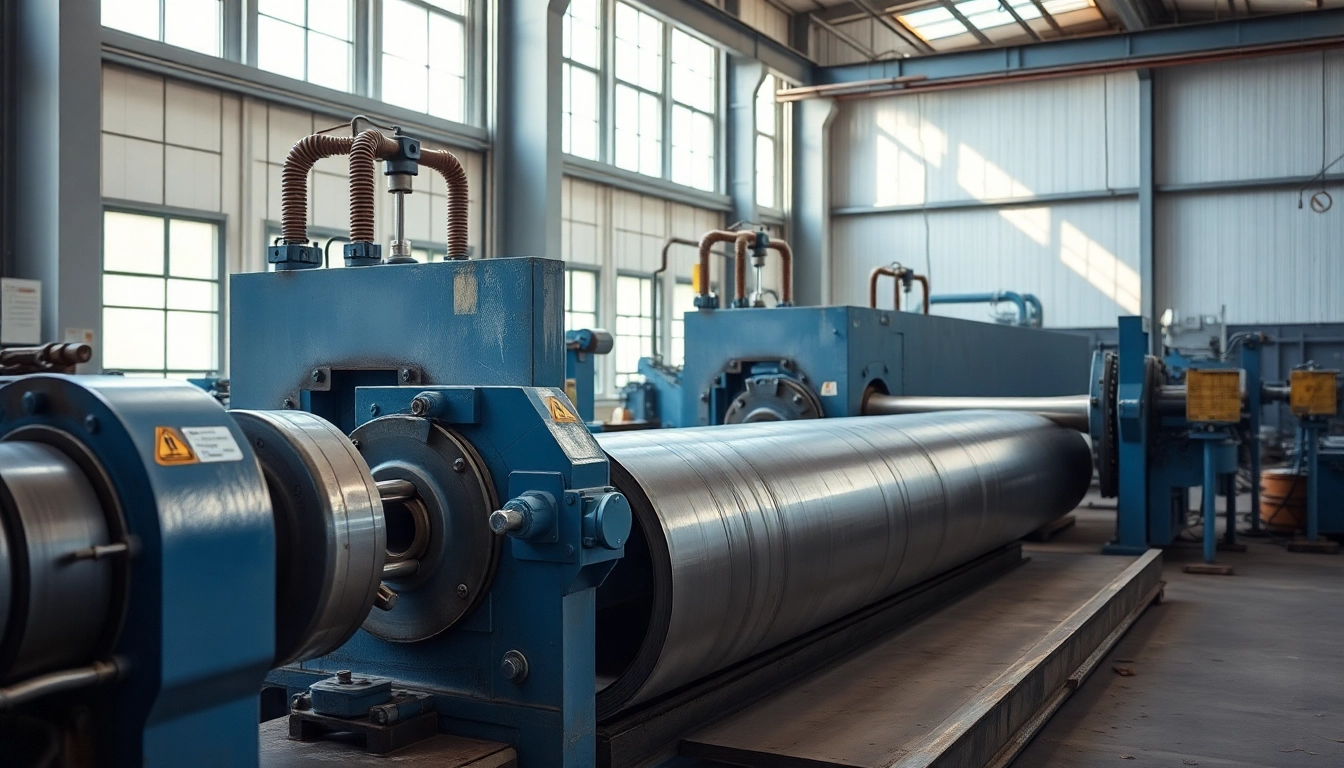
What is Plate Rolling?
Definition and Overview
Plate rolling is a crucial metalworking process that involves transforming flat plates of metal into cylindrical or curved shapes. This process is performed using specialized machinery known as plate rollers, which apply controlled pressure to the material to achieve the desired curvature. The fundamental principle behind plate rolling lies in the elasticity and plasticity of metals; during the operation, the material is gradually bent to the required radius, effectively creating components vital in various industries.
Importance in Metal Fabrication
As a core aspect of metal fabrication, plate rolling holds significant importance across numerous fields such as construction, automotive, aerospace, and shipbuilding. The ability to produce complex shapes is essential for creating structural components that meet specific design and engineering criteria. This versatility in shaping allows industries to manufacture everything from vessel hulls to large ducts and pipes efficiently.
Key Terminology in Plate Rolling
- Rolls: The cylindrical parts of the plate rolling machine that bend the plates.
- Radius: The distance from the center of the curvature to the arc of the plate, which can be adjusted based on specifications.
- Thickness: The measurement of how thick the plate is, influencing the rolling capacity and methods employed.
- Material Type: Different metals such as steel, aluminum, or composites may require varied approaches due to their mechanical properties.
Techniques of Plate Rolling
Four-Roller Plate Rolling
The four-roller plate rolling method is the most advanced and versatile technique available. Utilizing four rollers instead of three, this process allows for a higher degree of control over the plate’s formation. The configuration typically consists of two bottom rolls and two top rolls. The top rolls can either be fixed or adjustable, enabling manufacturers to roll thicker plates or create tighter radii.
Additionally, this method excels in reducing the amount of initial flat plate material needed and enhances accuracy in creating uniform cylindrical shapes. The four-roller system often employs advanced automation for precision, making it an asset in mass production environments.
Three-Roller Plate Rolling
The three-roller plate rolling technique is a more traditional approach that is widely used for smaller-scale production. In this setup, two bottom rollers and one top roller are employed. This configuration enables the rolling of metal plates into cylinders, although it may require additional manipulation to achieve perfect curves.
Commonly utilized in industries for producing components that do not require the intricate detailing offered by the four-roller system, the three-roller plate rolling method can effectively handle moderate to high thickness materials while providing solid results for various applications.
Two-Roller Plate Rolling
The two-roller plate rolling system involves only one bottom roller and one top roller. Although it is the simplest configuration, it is not as versatile as the other methods and is better suited for thinner materials or specific operations like initial bending or pre-forming. Operators must be experienced in using this technique as it often requires multiple passes to achieve a complete curve, making it less efficient for bulk production.
While the two-roller method has limitations, its low cost and straightforward mechanics make it a viable option for small shops or specialized applications.
Applications of Plate Rolling
Industry Use Cases
Plate rolling serves a vast array of industries, from heavy construction to technology. In construction, companies utilize rolled plates for creating structural supports or building frames. The automotive industry relies on precision-rolled plates for various vehicle components, including frames and chassis. Delivery pipelines for oil and gas often consist of rolled plates forming sections that fit together seamlessly.
Common Materials and Thicknesses
Various materials can be rolled, including steel, aluminum, and specialized alloys. The application of these materials depends on requirements such as weight, corrosion resistance, and strength. Typical thicknesses for plate rolling can vary widely, ranging from a few millimeters to several inches, depending on the end-use application.
Custom Fabrication Projects
Custom fabrication projects often utilize plate rolling to create unique components tailored to specific client needs. Whether producing a single prototype or a large batch, plate rolling allows manufacturers to meet precise specifications and demands. Industries frequently require custom shapes for architectural designs, specialized equipment, or unique machinery parts, illustrating the flexibility provided by this technique.
Challenges in Plate Rolling
Common Issues and Solutions
While plate rolling is an efficient process, it may present several challenges, such as achieving consistent radius and curvature, managing material properties, and maintaining quality control. Common issues include warping or inconsistent bending, which can often be addressed through better machine calibration or adjustments in technique. Training operators to understand variables such as temperature and strain can also significantly enhance output quality.
Material Limitations
Each type of metal has specific limitations based on its yield strength and brittleness. For example, harder materials may require additional force and lead to increased wear on rollers, necessitating proper machine maintenance and the possibility of incorporating heat treatment to facilitate the rolling process. Understanding these material characteristics is essential for successful operations.
Maintaining Precision and Quality
Precision in plate rolling is non-negotiable, especially in industries where safety hinges on structural integrity. This requires rigorous quality assurance processes, including regular machine calibration, frequent inspections of both rolled components and tooling, and the establishment of robust industry-standard protocols. Utilizing advanced technologies like laser measurement for curved shapes can also augment quality assurance practices.
Future Trends in Plate Rolling
Technological Advancements
Technological advancements are continually reshaping the landscape of plate rolling. Innovations such as computer numerical control (CNC) machining, automated systems for feed and control, and sophisticated simulation software drive greater efficiency and precision. These technologies are also reducing lead times and enhancing the customization capabilities in manufacturing.
Sustainability and Efficiency
As industries embrace sustainability, plate rolling is evolving to incorporate environmentally friendly practices. This includes optimizing machinery for energy efficiency and minimizing waste through precision processes. New eco-friendly materials are also emerging, which companies must adapt to, ensuring they remain competitive and responsible.
Market Outlook for Plate Rolling Services
The future of plate rolling looks promising, driven by the increasing demand for customized metal components across various industries. As manufacturing processes become more efficient and adaptable, the market for plate rolling services is anticipated to grow, opening opportunities for innovation and new startup ventures that focus on leading-edge technologies and processes.
Frequently Asked Questions
1. What is the rolling plate method?
The rolling plate method is a process involving heavy-duty, hydraulically operated bending rolls that curve shell plates into specific shapes, such as half or full circles, with adjustable positions for various thicknesses.
2. How do I calculate plate rolling dimensions?
To calculate plate rolling dimensions, you can use the formula: L = [(2 × t × R) + t] × (π × D), where L is the length, t is the thickness, R is the radius, and D is the diameter.
3. What are the different types of rolling techniques?
The three main types of rolling techniques include four-roller, three-roller, and two-roller setups. Each type offers different advantages based on the specifications of the output plate.
4. What materials can be used in plate rolling?
Plate rolling can accommodate various metals, including steel and aluminum, as well as specialized alloys. The choice of material depends on the application’s requirements for weight and strength.
5. What are the common challenges in plate rolling?
Common challenges include maintaining precision during the bending process, material limitations based on yield strength, and achieving consistent quality throughout production. Proper training and equipment maintenance help mitigate these issues.
Contact Information
Call Us: 780-955-3999
Email: [email protected]
Address: 1204 8 St, Nisku, AB T9E 7M1