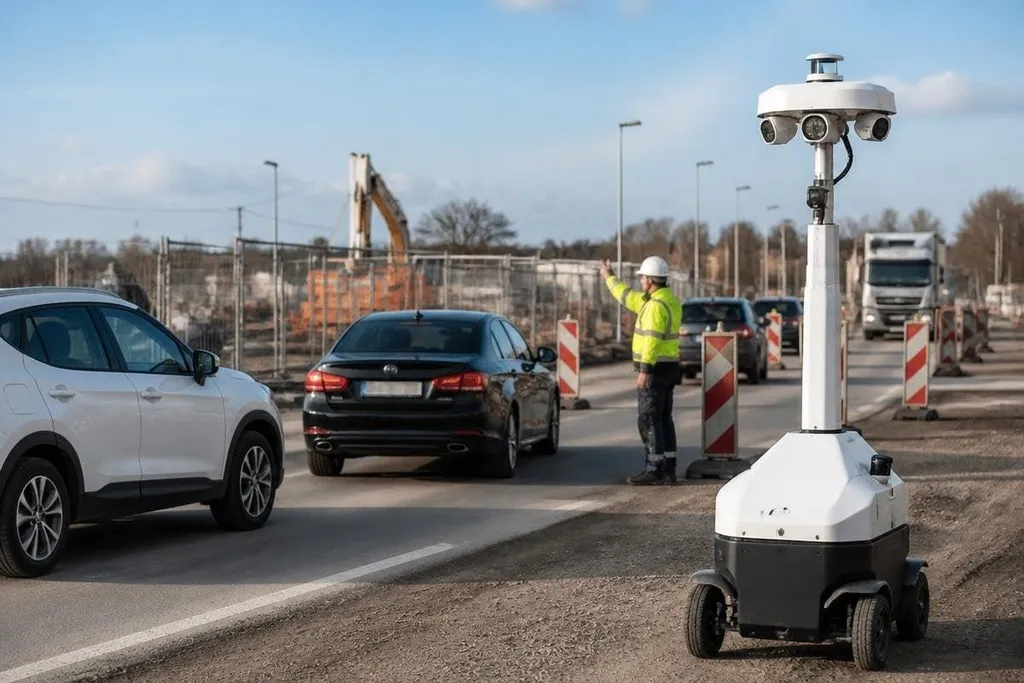
A traffic robot could direct cars at a work site, read road conditions, or help control signals. The label covers several different systems, so the first buying question is simple: what job does the robot perform, and who remains responsible when it fails?
- Job first: separate traffic control, inspection, and enforcement systems.
- Proof required: ask for results from the same roads, weather, and traffic mix.
- Failure plan: check how a person takes control when sensors or links fail.
What a traffic robot may do
A physical traffic robot uses cameras, radar, LiDAR, or other sensors to read vehicles and people around it. A controller then sends instructions to lights, signs, barriers, or a remote operator. The hardware matters, but the handoff between sensing and action matters more.
A roadwork system might warn drivers near a closed lane. An inspection robot could collect images of road damage without placing a person beside moving cars. A signal-control system might adjust light timing after it measures queues. These are different jobs with different safety rules, so one test result cannot cover all of them.
For a city manager, the useful measure is the work completed under local conditions. That means checking lane layout, daylight, rain, dust, wireless coverage, and the number of people who need to respond to an alert.
A robot that works on an empty test road may need a different setup beside a busy junction.
Where the benefits can appear
Traffic robots can keep people away from moving vehicles during some inspection or roadwork tasks. They can also collect the same type of image or sensor reading at set times, which gives a transport team a more consistent record.
A control system can react faster than a person who must watch several camera feeds, but speed alone does not prove that traffic moved more safely. The city still needs measures such as response time, false alerts, blocked lanes, and manual interventions. Those figures should come from the exact site where the system will run.
Traffic robots still have to work around signal timing, blocked lanes, weather, and people crossing outside marked areas. Robot24 can place a trial beside its site, date, task, and measured result, which leads to the next question: can the machine keep staff out of risky places without needing constant help?
The strongest benefit may be better access to places that are risky or difficult for staff. That benefit disappears if the robot needs a person beside it for every task, or if each fault stops traffic until a specialist arrives.
Where the risks start
Sensors can miss a person, misread a vehicle, or lose track of a lane when glare, rain, dust, or roadwork changes the scene. A wireless link can also fail. Each case needs a known safe state, such as a warning mode, a stopped motion command, or a trained operator taking control.
Data creates another concern. Cameras may record vehicle plates, faces, or worker movements. Before purchase, ask what the robot records, where it stores the files, how long the files remain available, and who can view them. A technical system still needs a clear data rule.
Maintenance can decide the result. Dirty lenses, damaged housings, low batteries, and software faults can reduce performance without producing an obvious warning. The contract should name inspection intervals, spare parts, repair times, and the person who signs off the system before each shift.
Public trust also depends on visible responsibility. Drivers need to know which authority controls the robot and how to report a bad instruction. A remote operator may supervise the system, but that role needs a written response process rather than a vague promise that someone is watching.
A buying checklist
Use these checks before a pilot reaches a live road:
- Name the task: write the exact action the robot may take and the actions reserved for people.
- Test the setting: run trials with the real lane design, lighting, weather range, and wireless network.
- Measure failure: record missed detections, false alerts, stops, and operator takeovers.
- Set the safe state: define what happens after a sensor fault, link loss, power problem, or collision.
- Control the data: limit access and set a deletion period for images and logs.
- Price the full service: include training, batteries, repairs, software fees, and site changes.
The evidence still missing
Traffic robots may reduce exposure to road hazards and give transport teams better records. Those benefits remain claims until a supplier shows site-specific results, clear failure data, and a cost that includes human supervision and upkeep.
I'd wait for that evidence before putting a traffic robot in charge of a live junction. The next useful proof is a dated trial report showing what happened during faults, bad weather, and manual takeovers.